Manhattan Active Edge Service vs XBound in MAWM: What Is the Difference and Why It Matters
Posted on April 11, 2026 in SCM
Edge Service vs XBound
A common confusion in Manhattan Active WM (MAWM) networking is treating Edge Service and XBound as the same component. They are not the same.
Both are integration gateways, but they solve two different integration directions.
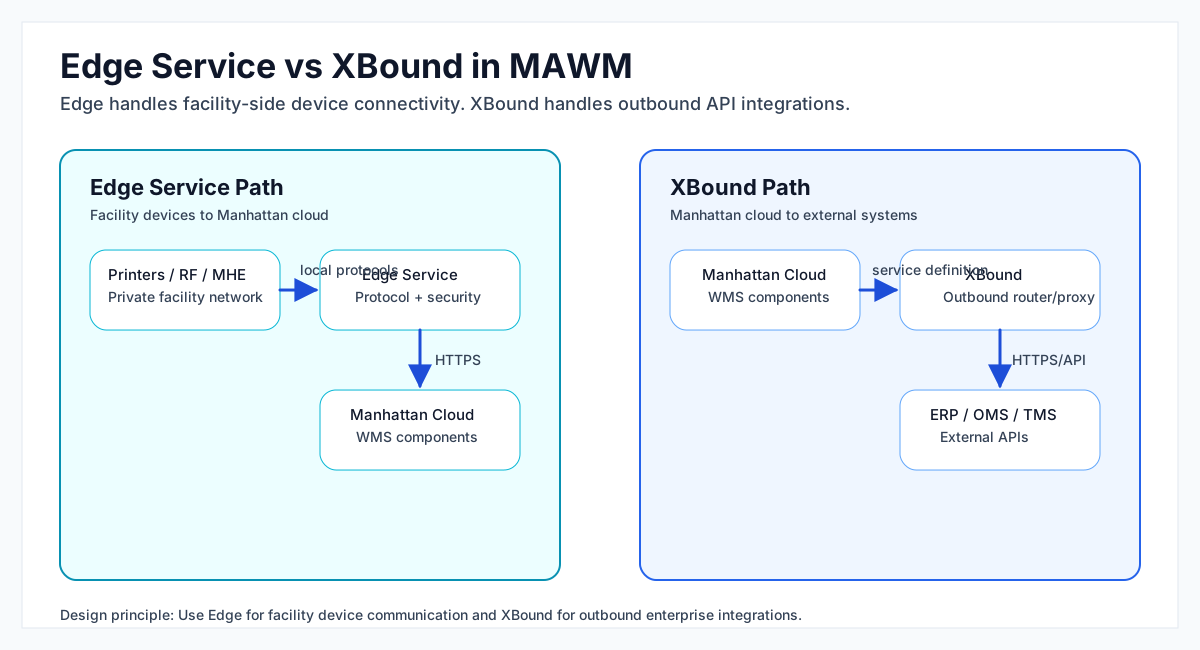
Quick Summary
- Edge Service connects warehouse/facility devices to Manhattan cloud.
- XBound connects Manhattan cloud to external enterprise or third-party systems.
If you remember one line, remember this:
Edge is for facility-side connectivity; XBound is for outbound cloud integrations.
What Edge Service Does
Edge Service is designed for systems inside customer facility networks, such as:
- Printers
- RF devices
- MHE and automation controllers
- Touch terminals and local operational apps
These systems usually run in private networks and may use non-HTTP protocols. Edge Service provides a secure bridge so Manhattan cloud can interact with them without exposing every device directly to the internet.
Typical value from Edge Service:
- Secure cloud-to-facility communication
- Protocol mediation between cloud APIs and device protocols
- Better control of latency-sensitive operations like print and MHE events
- Cleaner security boundary and policy enforcement
What XBound Does
XBound is an outbound proxy/router used by Manhattan cloud applications when they need to call external endpoints.
Common examples:
- ERP APIs
- OMS/TMS integrations
- Carrier services
- External token or service-definition endpoints
- Vendor and partner APIs
XBound uses route configuration and integration-specific auth patterns to forward requests from Manhattan services to target systems.
Typical value from XBound:
- Standardized outbound routing
- Centralized integration control
- Reusable authentication and endpoint definitions
- Better observability for external API calls
Architecture Direction (Most Important Difference)
- Edge direction: Facility devices -> Edge Service -> Manhattan cloud
- XBound direction: Manhattan cloud -> XBound -> External systems
This directional difference is why both can exist in the same solution at the same time.
Simple Decision Guide
Use Edge Service when:
- Your integration involves warehouse hardware or local facility systems
- You need to bridge private network devices with cloud services
- You need tighter local control for operational traffic
Use XBound when:
- A Manhattan component needs to call external HTTP(S) services
- You are integrating to enterprise platforms or third-party APIs
- You need managed outbound routing and auth configuration
Real-World Example
In one fulfillment flow:
- A putaway workflow may call a conveyor or printer path through Edge Service.
- The same workflow may call ERP/OMS updates through XBound.
That is normal and often the correct architecture.
Final Takeaway
Edge Service and XBound are complementary, not competing components.
Designs become cleaner and easier to troubleshoot when teams separate these responsibilities early:
- Device and facility network integration -> Edge Service
- Outbound business system/API integration -> XBound